77% of Companies Don’t Know How to Use AI The skills gap is holding back business transformation
Although 73% of organizations are planning to implement artificial intelligence-based tools, as many as 77% of companies admit they do not know how to use its potential effectively, and 51% are unprepared for the changes resulting from AI. At the same time, only 18% of businesses believe they have the capabilities needed to manage the transformation of employees’ roles. Antal’s data clearly shows a widening gap between the growing scale of implementation and organizations’ actual level of preparedness.
While companies are increasingly treating AI as an investment priority, the pace of technological implementation is clearly outstripping the development of skills and organizational readiness. In practice, this means the key question is no longer whether to implement AI, but how to prepare the organization to use it effectively.
According to the Antal and Sodexo Polska report AI Readiness, in which procurement professionals were asked about the development direction of their organizations, 27% of organizations identify AI implementation as a strategic priority, compared with 15% two years ago. At the same time, 51% of companies declare they are not ready for AI-related changes, while 77% do not know how to make effective use of its potential. Only 18% of organizations believe they are prepared to transform employee roles and competencies.
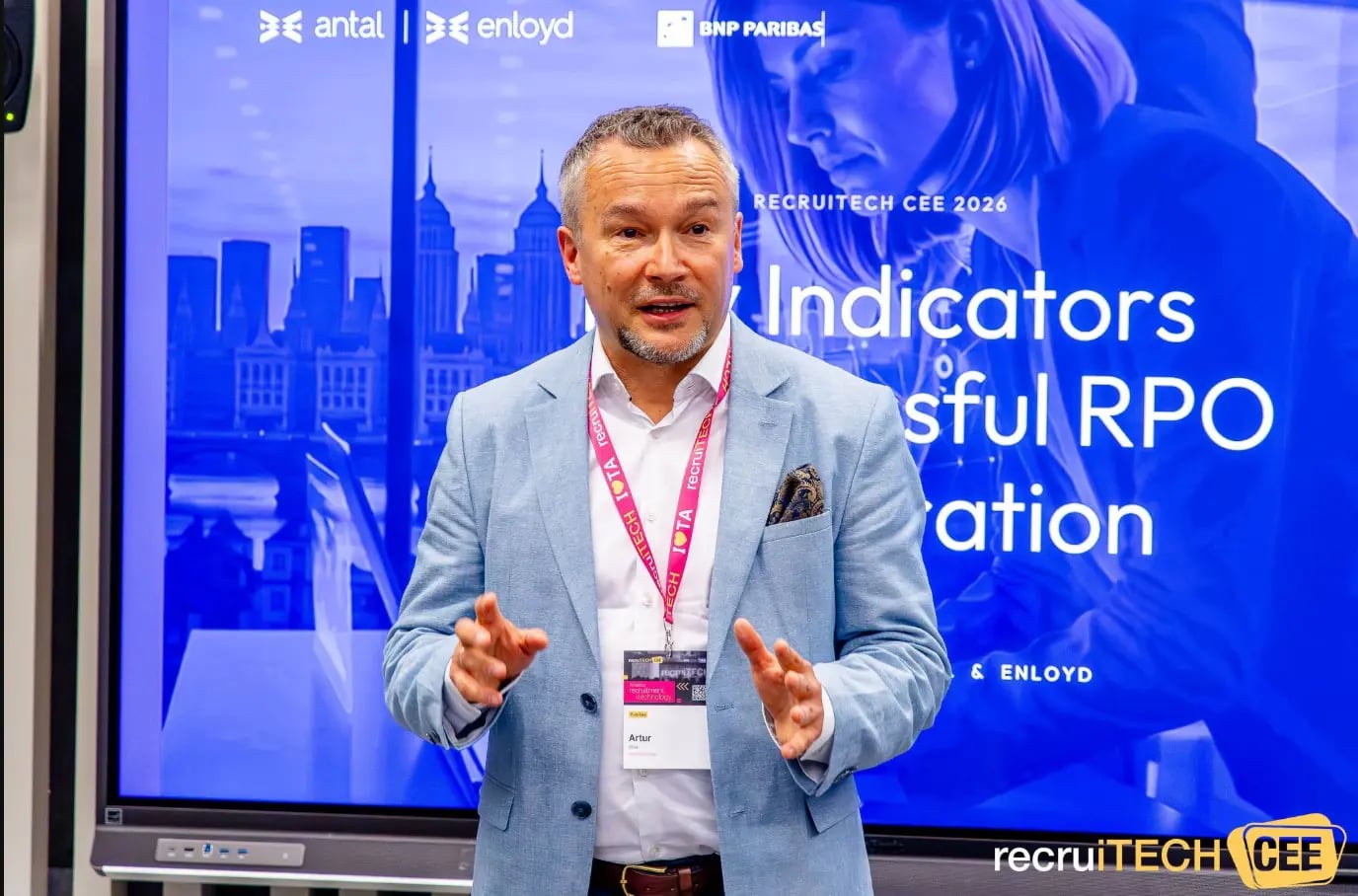
In many organizations, AI is still treated as a technology project, whereas the biggest barriers concern people, processes, and organizational culture. Companies may implement tools, but without preparing their teams, these tools will not translate into business results, says Artur Skiba, CEO of Antal.
The biggest barriers are not technological, but organizational
Companies are failing to keep pace with building the conditions necessary to make use of AI. The biggest challenge remains unstructured or insufficiently prepared data architecture, indicated by 45% of respondents, followed by a lack of team capabilities (42%), employee concerns (42%), and a lack of understanding of the new role of humans in an AI-supported work environment (41%). Only later do technological barriers appear, such as immature solutions and cybersecurity concerns (34% each), as well as implementation costs (32%). At the same time, 73% of organizations are planning to implement AI or automation tools, confirming that investment decisions are being made faster than decisions on how to prepare organizations for change.
Skills are developing outside organizations, while AI is already present at work
The lack of a systemic approach to transformation is particularly visible on the employee side. According to the latest Antal report, Activity of Specialists and Managers, 86% of experts declare a willingness to acquire new skills, yet at the same time 48% believe they do not receive sufficient support from their employer in this area. As a result, skills development is increasingly shifting to individuals: 71% of employees upskill independently, and among top managers this figure reaches 80%.
In turn, a study by Minds & Roses conducted for Łazarski University shows that 79% of employees already use AI tools, but only 25% use them in their professional work. This means AI is developing from the bottom up, while organizations are largely shifting responsibility for skills development onto employees instead of managing it systematically.
Future skills are changing faster than organizations
The pressure is further intensified by the pace of change in the labor market. According to the World Economic Forum’s Future of Jobs Report 2025, 39% of key skills will change by 2030. In practice, the effects of this dynamic are already visible today: 93% of specialists and managers believe they have the right qualifications for their work, yet 64% feel overwhelmed by the pace of organizational change, and half believe too many changes are happening at once.
AI is changing the way people work, but it requires a new leadership approach
Employees recognize AI’s potential, pointing above all to greater work efficiency (38%), support in decision-making (34%), and skills development (29%). At the same time, 36% are concerned about insufficient regulation, which shows that the market is still in the phase of becoming familiar with the technology rather than fully adapting to it.
Digital transformation does not begin with technology, but with decisions about the work model, the required competencies, and the role of people in the organization. Only then can tools be implemented effectively. This is the responsibility of the entire management board. Unfortunately, many companies still lack the procedures, standards, and development programs that would allow them to use AI in an organized and safe way. As a result, employees experiment on their own, which accelerates the adoption of technology, but at the same time increases the risk of organizational chaos and inefficient use of its potential, adds Artur Skiba of Antal.
Why are companies losing out on AI investments?
As the research results show, the ability to manage change and properly prepare employees for the implementation of artificial intelligence will be critical to the success of digital transformation in the coming years. In response to these challenges, Antal is conducting activities related to labor market analysis and employer education in the area of technological and skills-related change. These issues are also reflected in Antal’s ESG report, which identifies the development of human capital and support for innovation as two of the company’s most important areas of impact on the labor market.
In the debate about AI, a great deal of attention is devoted to the technology itself, and far less to how people’s work is changing. Our research shows that organizations today are more often struggling with skills shortages and low readiness for change than with the limitations of the tools themselves. That is why this topic has also been included in the ESG report. We believe that business responsibility includes not only implementing technology, but also preparing people to function in a dynamically changing work environment. Although we are not required to report on ESG, we do so voluntarily, treating the process as an expression of our responsibility toward the labor market, says Artur Migoń, Vice President of Antal.
More information about Antal’s approach to responsible transformation, the labor market, and future skill development can be found in Antal’s ESG report: https://antal.pl/wiedza/raport/raport-esg-2024-2025
Published: July 8, 2026 by Karolina Woldańska

Take care of your business development today.
Contact me and together we will find solutions that will help you achieve your goals.
Karolina Woldańska